THE VOCABULARY AUTOPSY
The Post-Mortem of Every Word You Trust
The Question
You inherited a vocabulary you never audited. Every word you use carries assumptions, power dynamics, and expired meanings — and you speak them as if they were neutral instruments. A word that replaces thought is more dangerous than a word that provokes it. The dictionary didn't describe the world. It ate it.
The Insight
An autopsy table for language. Each chapter dissects a word you thought you understood — love, success, intelligence, freedom — and reveals the hidden machinery beneath the definition. Not to destroy the words, but to see what they've been doing to your thinking.
Signature Sentences
“A word that replaces thought is more dangerous than a word that provokes it.”
“The dictionary ate the world.”
“Naming an emotion makes it smaller. Naming a phenomenon does the same.”
“The telescope became a wall.”
“Love is not in the word. The word leaks.”
Inside This Book
- 01Prologue: The Word Arrived on a Tuesday
- 02The Naming Trap
- 03Onomastic Hubris
- 04The Dissection Protocol
- 05How a Telescope Becomes a Wall
- 06Creative Destruction
- 07The Singularity
- 08Four Words About Disruption
- 09Surveillance Capitalism
- 10Techno-Feudalism
- 11Four Words About Value
- 12Post-Truth
- 13Filter Bubble
- 14Four Words About Connection
- 15Antifragile
- 16Paradigm Shift
- 17Four Words About Adaptation
- 18The Grand Pattern
- 19The Final Autopsy — Dissecting the Scalpel
- 20The Un-autopsy-able
- 21From Nouns to Verbs
- 22The Prophetic Void
- 23Epilogue: The Unnamed World
Prologue
The word arrived on a Tuesday.
It came during a strategy meeting on the fourteenth floor of a building that could have been any building in any city that runs on slide decks and quarterly targets. The room smelled like dry-erase markers and catered sandwiches that no one had touched.
The discussion had been circling for twenty minutes. A regional division was underperforming. Thirty employees would need to be “transitioned.” The question, unspoken but present in every cleared throat, was simple: Are we doing something wrong, or is this just how it works?
Then a vice president leaned back in his chair and said, “Look, this is creative destruction.”
The room changed. Not dramatically — no one gasped or stood up. The change was more like a thermostat clicking on. Shoulders relaxed. Heads nodded. Two words, and an entire argument folded itself into a neat square and slid into everyone’s pocket.
No one asked what exactly was being destroyed. No one asked who decided the destruction was creative rather than careless. The word had done what words do when they graduate from description to furniture: it ended the conversation while making everyone feel like the conversation had been had.
Related Books
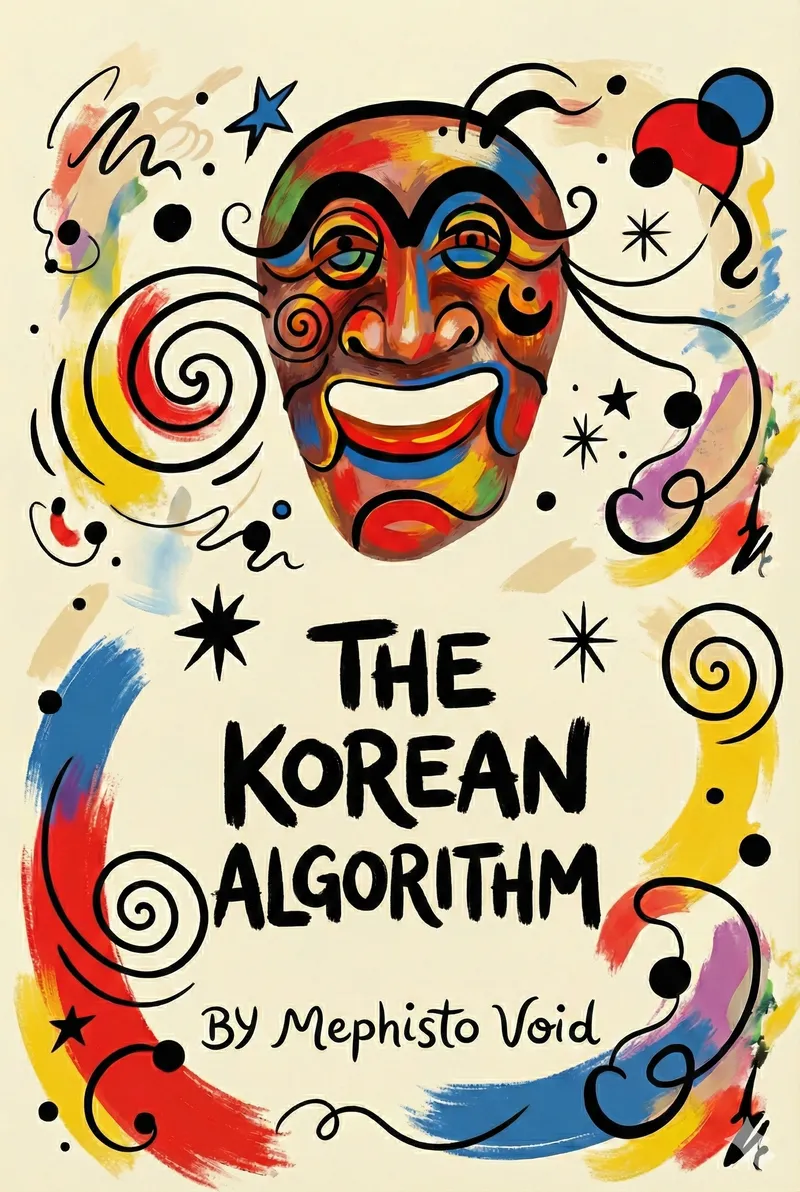
THE KOREAN ALGORITHM
Why 50 Million People Run the Same Code — And What It Costs Them
Five minutes before the wheels touch the runway, a plane full of passengers splits into two populations. The Koreans are already standing, bags in hand, coats on. Everyone else is still seated. I started asking: what code are they running? Pre-loading — the elimination of future friction before it arrives. The present tense, in Korean life, is a staging area for the future. Whether the life that fills those seconds is also being lived — that is the question the algorithm does not ask.